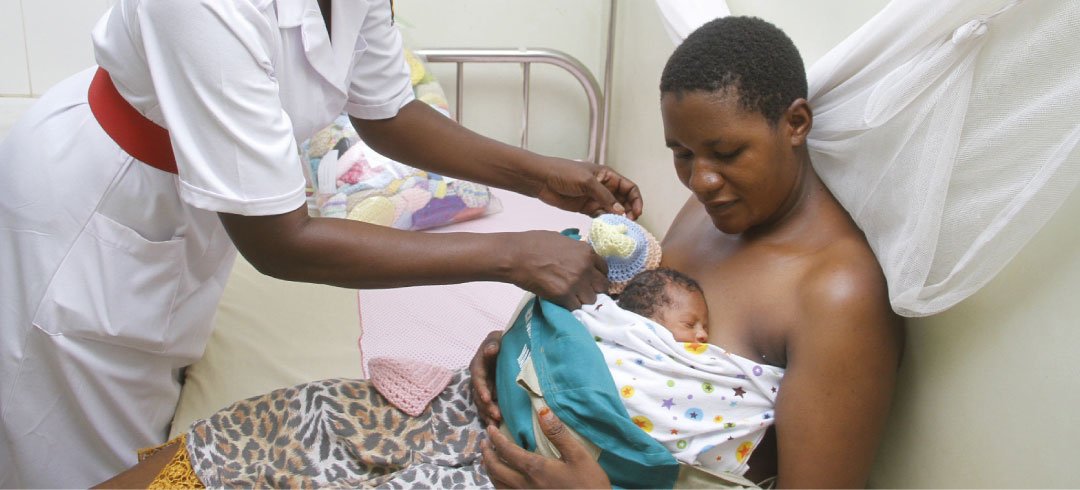
One of the most impactful newborn health initiatives championed by Peter Waiswa is the advancement of Omwana Kangaroo Mother Care (KMC) in Uganda. This innovative approach has transformed how preterm and low-birth-weight babies are cared for, particularly in low-resource settings where neonatal mortality remains a major challenge.
Kangaroo Mother Care is a simple, evidence-based method that focuses on keeping newborns warm through continuous skin-to-skin contact, promoting exclusive breastfeeding, and strengthening the bond between parent and child. By placing the baby directly on the caregiver’s chest, KMC helps regulate body temperature, improves feeding, and significantly increases the chances of survival for vulnerable newborns.
Core Components of Kangaroo Mother Care
Skin-to-Skin Contact
The newborn is placed upright on the caregiver’s bare chest, usually wearing only a diaper and a cap. This direct contact helps regulate the baby’s body temperature, stabilize breathing, and prevent hypothermia.
Exclusive Breastfeeding
KMC promotes frequent and exclusive breastfeeding, ensuring that the baby receives vital nutrients needed for healthy growth and development.
Continuous Care
For optimal outcomes, skin-to-skin contact is encouraged for as many hours as possible—often more than 20 hours a day—until the baby reaches a healthy weight or term age.
Benefits of Kangaroo Mother Care
For the Baby
-
Reduces the risk of infections and neonatal sepsis
-
Improves weight gain and supports brain development
-
Shortens the length of hospital stays
-
Increases survival rates among preterm infants
For the Mother and Caregivers
-
Builds confidence in caring for a vulnerable newborn
-
Reduces anxiety and stress during the newborn period
-
Strengthens emotional bonding between parent and child
The OMWaNA Trial in Uganda
A major milestone in advancing Kangaroo Mother Care in Africa was the OMWaNA Trial (Operationalising Kangaroo Mother Care before Stabilisation among Low-Birth-Weight Neonates in Africa). The study was conducted across several government hospitals in Uganda, including Jinja Regional Referral Hospital.
The research explored whether KMC could safely begin before a newborn is fully stabilized, for example while still receiving oxygen or intravenous fluids.
Key Findings
-
Early initiation of KMC can significantly improve survival outcomes for low-birth-weight newborns.
-
The approach is highly cost-effective for resource-limited health systems.
-
Continuous maternal involvement in neonatal care improves both clinical outcomes and caregiver confidence.
The trial also highlighted the importance of strengthening hospital infrastructure and training healthcare workers to support mothers providing continuous care within neonatal units.
Global Significance
The work on Omwana Kangaroo Mother Care contributes to global evidence supporting early and continuous KMC as a critical intervention for newborn survival. Findings from this research have informed international discussions and guidelines, including those published in World Health Organization and global maternal and newborn health research featured in The Lancet.
Through leadership in research, policy engagement, and implementation, Peter Waiswa has helped advance Kangaroo Mother Care from a clinical concept into a practical, life-saving intervention benefiting families and health systems across Uganda and beyond.