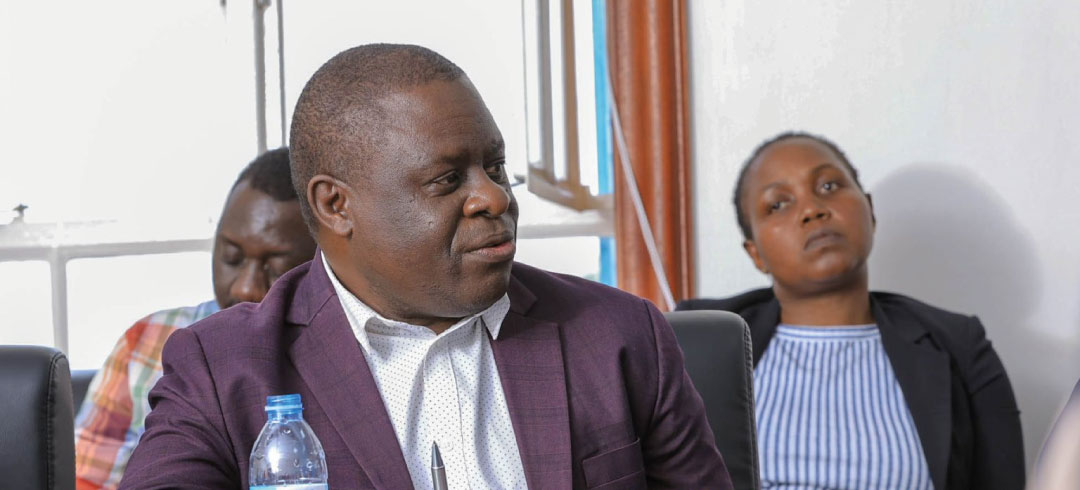
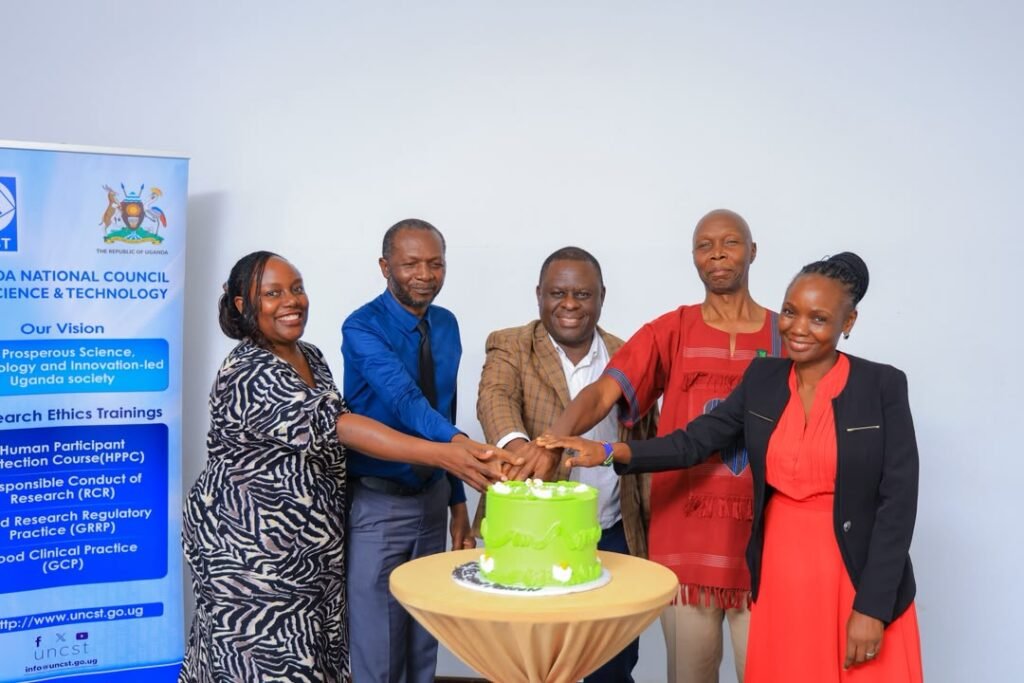
 New Chairperson Dr. Edward Kibikyo Mukooza (2nd right) and Winifred Nazziwa ,Head,Research Compliance and Quality assurance ,UNCST cutting cake alongside Emeritus Chairperson Prof. Peter Waiswa (center), Prof. Elizabeth Balyejusa Kizito (1st left), Director of Research, Partnerships and Innovation, and Dr. Frederick Nakwagala Nellson (2nd left), Head of the UNCST Accreditation Committee
In 2014, research ethics was still relatively new at Uganda Christian University.
The University had established a Research Ethics Committee, but the structures and systems needed to support ethical review of research were still taking shape. Few people at the University knew much about the Committee, and fewer understood why research involving human participants required ethical review.
Into this early stage came Prof. Peter Waiswa, appointed the inaugural Chairperson of the Uganda Christian University Research Ethics Committee (UCUREC).
He was not taking over an established research ethics system. He was tasked with building a credible and effective system for ethical review of research at the University.
Building the Foundation of a Credible System
The first task was to put the foundations in place. Following guidance from the Uganda National Council for Science and Technology (UNCST), the Committee was reconstituted to bring together scientific, ethical and legal expertise, alongside non-UCU and community representation.
Members were trained. Procedures were developed. The Secretariat was strengthened. The Committee began the long process of establishing the systems required for accreditation.
It took more than five years. In September 2019, the Uganda Christian University Research Ethics Committee (UCUREC) was accredited by UNCST as UG-REC-026.
From Compliance to Institutional Practice
Accreditation gave the Committee formal recognition, but the work of building a functioning research ethics system continued.
Under Prof. Waiswa’s tenure, UCUREC developed and revised its Standard Operating Procedures through five versions, introduced templates and guidance for researchers, and strengthened processes for reviewing and monitoring approved studies.
The Committee also became one of the early Research Ethics Committees to adopt UNCST’s National Research Information Management System (NRIMS), fully adopting the system by 2020.
These developments mattered because ethical review had to be more than a requirement on paper. Researchers needed clear guidance. Reviewers needed consistent procedures. Approved studies needed to be monitored. Records needed to be maintained.
Gradually, ethical review became part of the way research was conducted at UCU.
From Committee to Institutionalization
As time went by, UCUREC grew from a little-known committee into an important part of UCU’s research system.
As research at the University and beyond expanded, so did UCUREC.
The Committee began with seven members in 2014. Today, its membership has grown to 17, bringing together UCU members, people from outside the University and community representatives.
Its scope also moved beyond the medical and health fields.
Today, UCUREC reviews research across disciplines including business, law, education, theology, social sciences and engineering.
More than 3,000 research protocols have been reviewed since the Committee was established, covering undergraduate, Master’s, PhD, staff and externally funded research.
The numbers recorded through NRIMS show how the workload has changed. Between 2020 and September 2026, 1,663 protocols were recorded, while annual submissions rose from 56 in 2020 to 351 in the first nine months of 2026.
The Committee has also conducted monitoring visits to approved studies in districts including Soroti, Kasese, Kabarole, Kanungu, Jinja and Arua.
Behind these numbers is a change in the place of research ethics within the University.
Under his tenure, UCUREC developed the systems, procedures, tools and institutional structures that helped turn it from a newly established committee into a recognised research ethics institution. These include five versions of its Standard Operating Procedures, researcher guidance and templates, NRIMS, research monitoring processes, and a strengthened Secretariat and membership.
What was once little known has become part of the University’s wider research governance system.
International Recognition
The Committee’s development has also extended beyond national accreditation.
Following its UNCST accreditation, UCUREC secured registration through the United States Office for Human Research Protections (OHRP) in 2022. Its Institutional Organisation registration was renewed in June 2025, alongside its Institutional Review Board and Federalwide Assurance registrations, which are currently valid through June 2028.
The recognition has strengthened the Committee’s ability to review research connected to institutions and studies supported by the U.S. Department of Health and Human Services.
This is another indication of how far the institution has moved from its beginnings in 2014.
The Leadership Behind the Journey
For 12 years, Prof. Waiswa provided that leadership.As Chairperson, he became the face of UCUREC to researchers, study participants, communities, sponsors, regulators and institutions.
The role demanded more than technical knowledge.It required independence. It required confidentiality. It required fairness. And often, it required listening carefully before making a decision.
Over the years, he worked alongside two Vice Chairpersons. Dr. Ekiria Kikule helped lay the Committee’s early foundations, while Dr. Edward Kibikyo Mukooza worked closely with the Chairperson and Secretariat, particularly during the journey towards accreditation.
Now, the responsibility moves to Dr. Mukooza.
The Handover
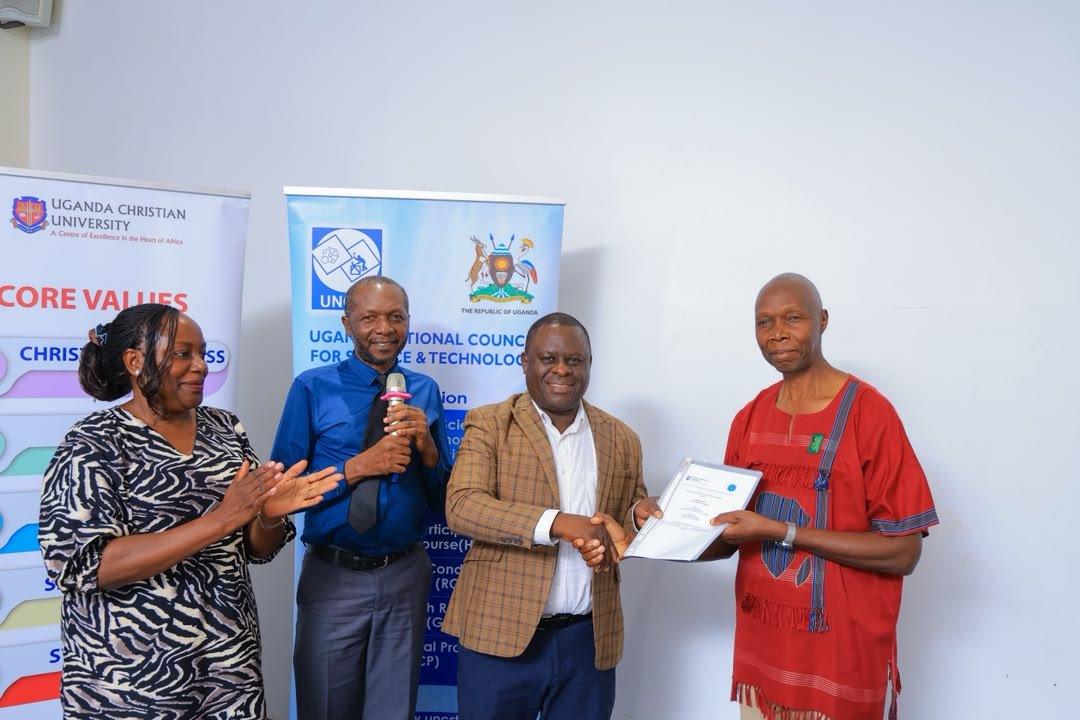
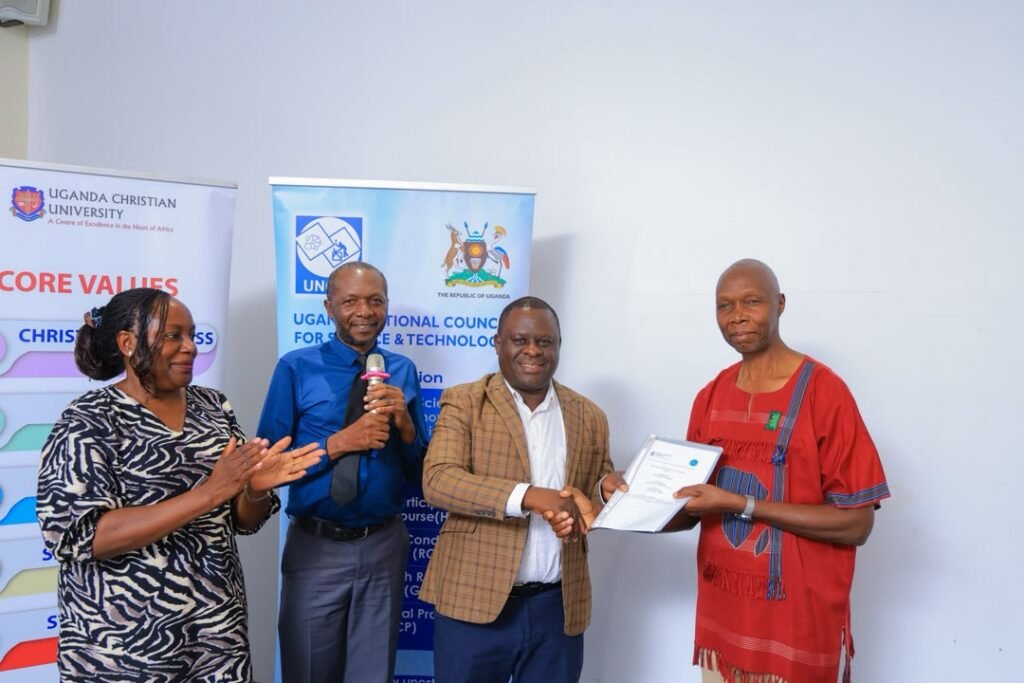 New Chairperson Dr. Edward Kibikyo Mukooza (right) receiving the handover report from Emeritus Chairperson Prof. Peter Waiswa (center).Looking on are Prof. Elizabeth Balyejusa Kizito (1st left), Director of Research, Partnerships and Innovation, and Dr. Frederick Nakwagala Nellson (2nd left), Head of the UNCST Accreditation Committee
In October 2026, after 12 years as inaugural Chairperson, Prof. Waiswa formally handed over the leadership of UCUREC to Dr. Edward Kibikyo Mukooza.
His final words as Chairperson reflected both the journey behind him and the institution he was leaving behind.
“I thank the University Management for its support throughout my tenure, and in particular for embracing the then-new idea of a Research Ethics Committee. What began as a function confined to the medical and health field is now embraced across all disciplines of the University. I thank the Directorate of Research, Partnerships and Innovation for being a dependable home for the Committee.
I am grateful to my Vice Chairpersons, Dr. Ekiria Kikule and Dr. Edward Kibikyo Mukooza, and to every member who has served on the Committee since 2014, many of them giving their time far beyond what was asked. I thank the Secretariat for its dedication, and UNCST for its guidance, training and patience during our long journey to accreditation. I thank UNCST also for the 2020 grant that equipped our office, and the researchers who trusted us with their work.
It has been an honour to serve as the inaugural Chairperson of UCUREC. I hand over with confidence, and I wish Dr. Mukooza and the Committee every success.”
The most important measure of 12 years of leadership is not simply what happened while Prof. Waiswa was Chairperson.
It is what remains after he leaves.The systems are in place. The procedures are established. The Secretariat is stronger. The Committee has a recognised mandate. Its experience has accumulated across thousands of protocols and numerous disciplines.
And its role within the University is no longer in question.The Committee will continue reviewing research, supporting researchers, engaging regulators and, most importantly, protecting the rights, safety and welfare of research participants.
Dr. Mukooza therefore takes over more than a chairmanship. He inherits an institution.
An institution built from an idea that was still new in 2014, strengthened through years of work, and now firmly embedded in the research life of Uganda Christian University.
Prof. Waiswa leaves as its first Chairperson. But the institution he helped build continues.