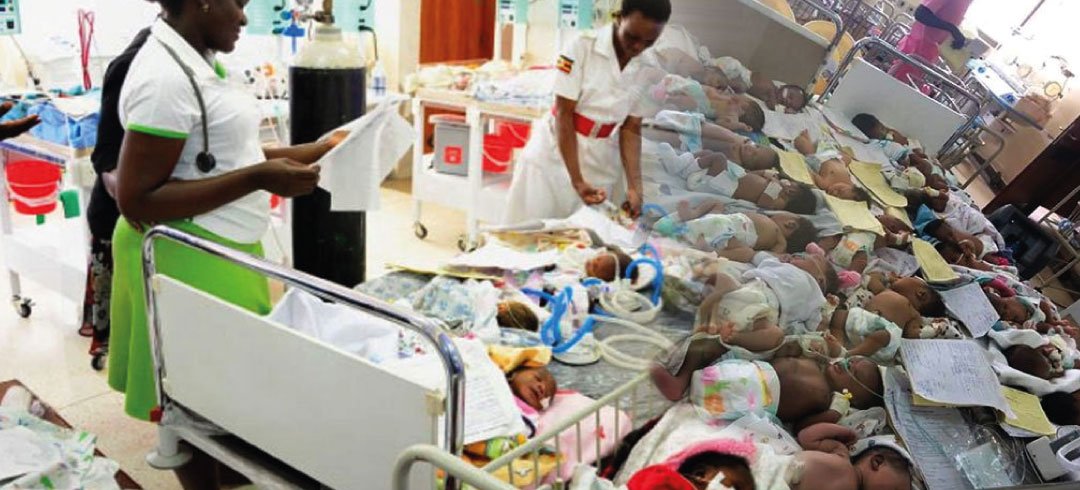
The East Africa Preterm Birth Initiative – Uganda (PTBi-Uganda) is a landmark maternal and newborn health program that seeks to reduce deaths among premature and low-birth-weight babies. The initiative was implemented through a collaboration between Makerere University and University of California, San Francisco, with Peter Waiswa playing a central role as one of the key pioneers and primary instigators of the program in Uganda.
Recognizing that many newborn deaths occur within the first 28 days of life, the initiative focuses on improving the quality of care for mothers during labor and delivery, as well as specialized care for preterm newborns. By strengthening health systems and clinical practices, the program has helped transform how hospitals manage premature births in eastern Uganda.
Geographic Focus
PTBi-Uganda operates across six hospitals in the Busoga region, including:
-
Jinja Regional Referral Hospital
-
Iganga General Hospital
-
Kamuli General Hospital
-
Bugiri General Hospital
-
St. Francis Hospital Buluba
-
Kamuli Mission Hospital
These facilities serve large populations in eastern Uganda and are key referral centers for maternal and newborn health services.
The Preterm Birth Care Package
A central innovation of PTBi-Uganda was the introduction of a comprehensive “preterm birth care package” designed to strengthen clinical practices and improve outcomes for both mothers and babies.
Key interventions include:
Antenatal Corticosteroids (ACS)
The program dramatically improved the administration of antenatal corticosteroids for mothers in preterm labor, a treatment that accelerates fetal lung development and improves newborn survival.
Neonatal Resuscitation
Health workers received enhanced training and mentorship to strengthen newborn resuscitation skills immediately after birth.
Kangaroo Mother Care (KMC)
Hospitals strengthened the use of skin-to-skin care for low-birth-weight babies, helping regulate temperature, support breastfeeding, and improve survival outcomes.
Infection Prevention and Quality Improvement
The initiative promoted improved clinical practices and infection prevention measures within maternity and neonatal units.
Measurable Impact
One of the most striking achievements of PTBi-Uganda was the rapid improvement in the use of antenatal corticosteroids, which increased from 22% to 90% between 2016 and 2018 in participating facilities. This improvement reflects how targeted training, mentorship, and systems strengthening can significantly improve maternal and newborn care.
Regional Collaboration
The broader East Africa Preterm Birth Initiative represents a regional partnership involving:
-
Makerere University School of Public Health
-
University of California, San Francisco
-
Kenya Medical Research Institute
-
University of Rwanda
Through this collaboration, researchers, clinicians, and policymakers have worked together to generate evidence and translate it into practical interventions that improve care for premature newborns across East Africa.
Leadership and Legacy
Through his research leadership and commitment to implementation science, Peter Waiswa helped catalyze the development and expansion of PTBi-Uganda. The initiative stands as an example of how rigorous research, health system strengthening, and regional collaboration can translate into life-saving improvements for mothers and newborns.